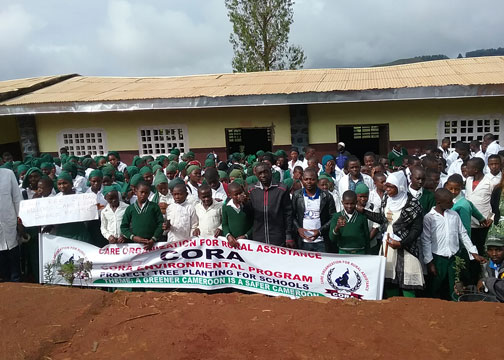
Environmental Education
ENVIRONMENT PROGRAM AND ACHIEVEMENTS
Introduction:
Understanding that social and economic development can only be achieved in conjunction with environmental sustainability is very vital. Considering that a large majority of African people and consequently a large majority of Cameroonian people live in rural areas and depend heavily on natural resources (land) for their sustenance and wellbeing, their traditional practice of agriculture makes environmental sustainability measures inevitable. Although climatic changes are currently affecting the entire world, Africa is more affected because of its geographical exposure and its greater reliance on climatic sensitive sectors such as agriculture. Cameroon is greatly affected by changes in temperature and precipitation. These changes negatively affect the livelihood activities of rural communities, and create concerns food security for the general society. At the local level, indicators of changes include: shortages of water in catchment areas, drying up of streams and rivers, reduction of flow rate of some rivers, unpredictable starts and ends of the rainy seasons, the disappearance of some tree and plant species, etc. Human action such as felling trees has led to some of these changes.
Program Components:
- School Environmental Project
- Renewable Energy Production/Training
- Water Catchments Protection
- Organic Farming Propagation/Training
- Promoting agro-forestry through nursing and out planting of nitrogen fixing trees
Overall objective of the Environmental program
To promote environmental sustainability by training target groups on environmental protection and management in rural communities.
Specific objectives of the program
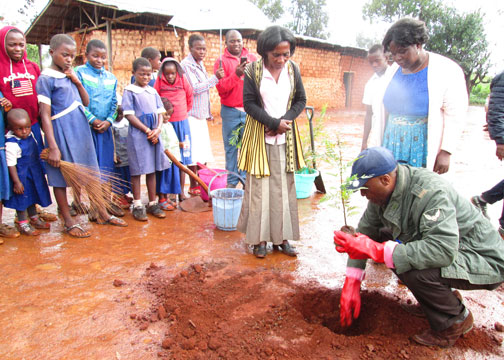
- To recover productive farmland and protect water catchments by replacing eucalyptus trees with indigenous tree species.
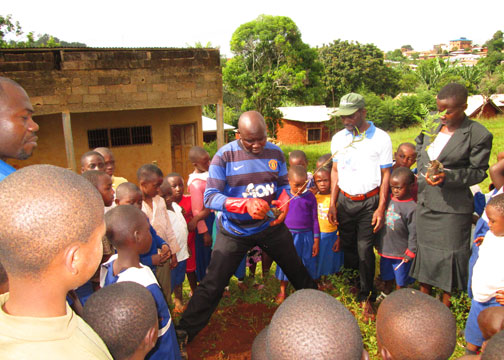
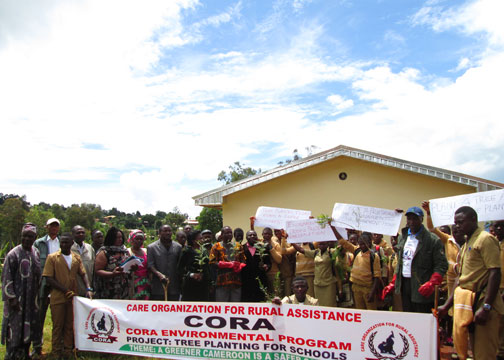
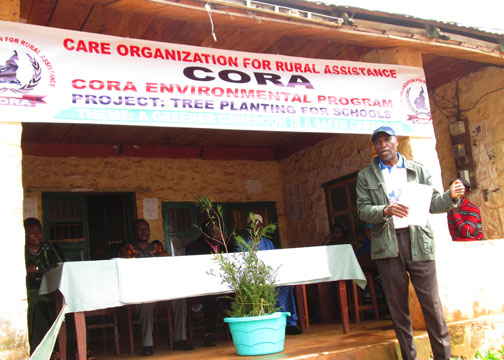
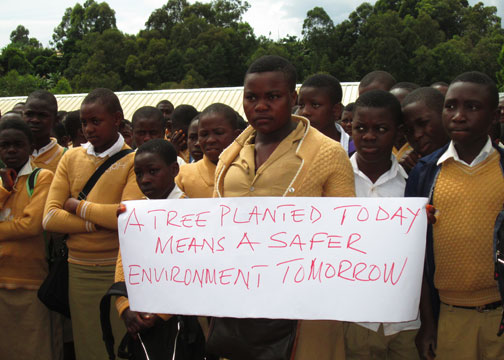
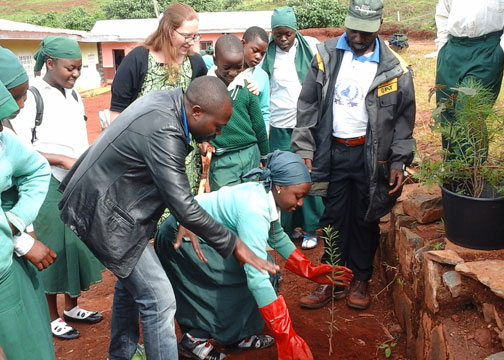
- To inculcate among youths the values of environmental protection and management through school environmental programs
Program Components
- School Environmental Project
- Renewable Energy Production/Training
- Water Catchments Protection
- Organic Farming Propagation/Training
- Promoting agro-forestry through nursing and out planting of nitrogen fixing trees
- To recover productive farmland and protect water catchments by replacing eucalyptus trees with indigenous tree species.
- To inculcate among youths the values of environmental protection and management through school environmental programs